For any new development, subdivision or redevelopment in Victoria, the 2026 WSUD guidelines are your practical reference for stormwater management. They are the means by which the Victoria Planning Provisions and planning guidance (Clauses 53.18, 56 and 19.03-3S) are made to align with technical modelling, long-term asset upkeep and the demands of local councils.
In this guide I put the Victorian WSUD requirements into plain English. You will find an explanation of stormwater quality and detention, on-site reuse, Blue Factor Victoria, MUSIC modelling and the sort of documentation a planning permit application calls for. I have put this together for the project owner, consultant, designer or planner who would be better off addressing drainage problems before the concrete is poured than after. Raymond Vale.
The Victorian Framework

By way of natural and engineered systems, water sensitive urban design in Victoria sees to it that stormwater is managed where the rain falls. One does it to mitigate flood risk, cut down on pollution, make use of water when one can and aid in urban cooling, not to mention slowing peak runoff.
While the planning guidance and Victoria Planning Provisions form the overall framework, the applicant for a permit has to look at the planning scheme, overlays, local council policies and what the drainage authority says. For more detail, see Victoria OSD requirements. Do not expect the same checklist from every council; Victorian WSUD is not dispensed like some kind of sausage machine.
What is covered by the rules
At a strategic level Clause 19.03-3S is concerned with integrated water management. It is there to underpin development that curbs the need for drinking water, has regard for the nexus between urban growth and infrastructure and puts protection on our waterways.
Then there is Clause 53.18 which lays down standards for stormwater in certain types of development. For residential subdivision, Clause 56 on integrated water management will set the tone as to what is expected in terms of drainage design, conservation and the quality of runoff.
One could say Amendment VC154 has put more muscle into the Victorian approach to planning for stormwater. But given that council procedures and schemes are subject to change, it is wise to verify the referral requirements and permit conditions on each project.
To whom the rules apply
Be it multi-unit, industrial, commercial or a residential subdivision, WSUD obligations will come into play. The path one takes is dictated by the scale of the works, the impervious area you are proposing, the drainage network and if a permit is triggered by the project.
A minor renovation may not have much in the way of formalities but on a sizeable site you might be looking at a stormwater management plan, hydraulic work, a treatment train to the council’s liking or MUSIC modelling. Before you finalise the layout, it is best to know what the authority wants.
Typical projects
With residential subdivision you have to give thought to road drainage, allotment discharge, constructed wetlands and raingardens, as well as who will be responsible for maintenance down the line. Multi-unit sites have less room to manoeuvre; the hardstand, basement ramps and driveways mean a good deal of runoff in a small space.
Commercial and industrial operations will likely need to treat the output from car parks, loading zones and large roofs. An industrial site might have to do more than the usual sediment and nutrient removal to control pollutants, contingent on the environmental risk and intended use.
And do not think “no planning permit” gives the water licence to do as it pleases. Building approval or drainage approval can still be in order. Water is remarkably unimpressed by paperwork.
Performance targets

Stormwater in Victoria is judged on how much pollutant is taken out before it departs the site. We are talking total suspended solids, phosphorus and nitrogen, litter and the management of flow and peak runoff.
The BPEMG, or Urban Stormwater Best Practice Environmental Management Guidelines, is the go to for technical performance. The benchmark is generally an 80 per cent reduction in total suspended solids, 70 per cent for litter and 45 per cent apiece for total phosphorus and total nitrogen.
| Assessment Area | Common Benchmark Or Question | What it means on site |
|---|---|---|
| Total suspended solids | 80 per cent reduction | To keep soil and fine particles from the drainage system |
| Total phosphorus | 45 per cent reduction | Nutrient pollution that fuels algal growth is curtailed |
| Total nitrogen | 45 per cent reduction | Less dissolved nutrients get into the waterways |
| Litter | 70 per cent reduction | Keeps the larger rubbish out of the pits and pipes |
| Runoff and detention | As per the project | Downstream pressure and site flooding are controlled |
Do not mistake these numbers for a blanket alternative to what the permit authority requires today. There are occasions when a council will put forward its own requirements be it more modelling, a local treatment standard or a particular discharge limit and design storm. In the end, the project is bound by what the planning scheme and any written advice from the council dictate.
Quality Is Not The Whole Job
One can have a treatment system with impressive pollutant removal credentials and yet have trouble if it means no access to a site, maintenance is impossible or a neighbour’s property is left to flood. A well thought out design will address all of this: conveyance, overflow, flood levels, stormwater quality and detention, as well as how the asset holds up after a few years of being left to its own devices.
On-site retention and reuse in the form of rainwater tanks for irrigation, laundries or toilets is an option to lower potable water use. The design has to be such that it allows for tank drawdown, roof catchment, plumbing separation and the like. There is little stormwater advantage to be had from a full tank come the next downpour.
Blue Factor And MUSIC

With Blue Factor and MUSIC one can put some numbers to a stormwater concept. They are not a substitute for sound engineering or a council review but they will indicate if a treatment train is going to deliver on the pollutant reductions called for.
For projects in Victoria, the Model for Urban Stormwater Improvement Conceptualisation (MUSIC) is the norm for modelling. An authority may call for Blue Factor in the course of a local assessment so it is wise for applicants to check with the council on the version, reporting format and assumptions they will have.
What The Model Needs
To be credible the model must have discharge points, rainfall data, impervious percentages, land-use and operation assumptions, treatment nodes and catchment areas. It is also up to the modeller to set out the behaviour of wetlands, swales, bioretention systems and rainwater tanks in both dry and wet weather.
The outcome is easily altered by the size of a tank, bypass flows, filter media or the configuration of a treatment node; small things make for big differences. I have been on projects where the preliminary model was very flattering until the designer made proper allowances for roof bypasses and what the tank would actually be asked to do.
A model is there to underpin the design not put a gloss on it. A reviewer from the council is apt to have questions over results predicated on optimistic parameters or treatment assets at odds with the landscape plan.
Practical WSUD Treatments
In Victoria you will find most projects that work employ a treatment train of source controls, end-of-line treatment and conveyance rather than some single contrivance to rescue the whole catchment. It is a more resilient way of doing things and spares one asset from having to shoulder the entire load.
What is appropriate is a matter of the soil, slope, space, budget and groundwater among other things. You cannot just put a raingarden in whatever corner is available and claim success.
Options And Trade-Offs
- Rainwater tanks: Rainwater tanks are good for on-site use but only with dependable demand and upkeep.
- Raingardens and bioretention systems: Raingardens and bioretention do a fine job of filtering runoff and fitting in with the landscape if the drainage and media are right and there is room to renew them.
- Vegetated swales: Vegetated swales will slow and filter flow though they are not always feasible on a steep or tight urban block.
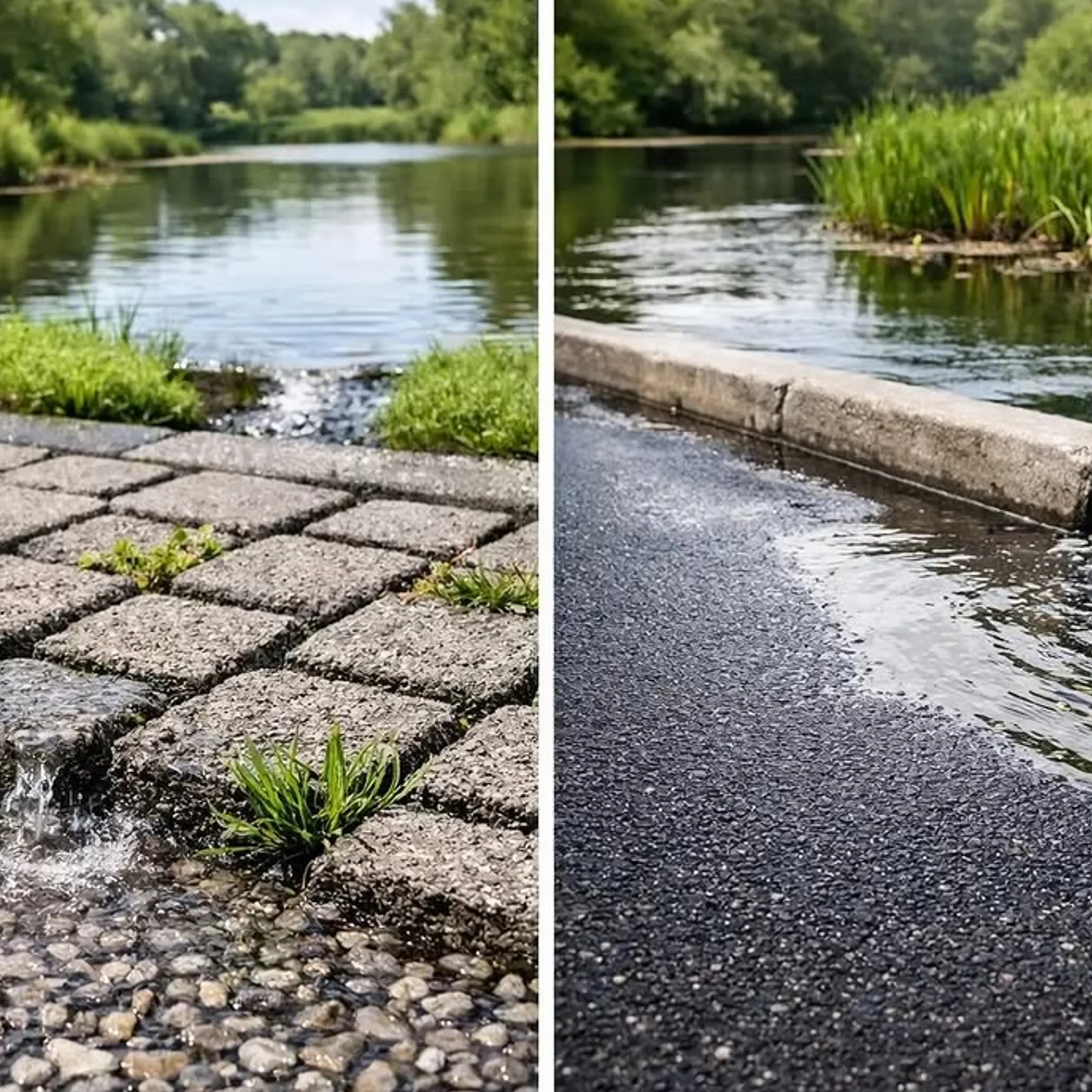
- Permeable paving: Permeable paving will cut down on surface runoff if done properly, something poor subgrade or a blocked surface will negate.
- Stormwater detention: Detention is for easing pressure on downstream drainage but it does nothing for nutrients or the finer pollutants.
- Green infrastructure: Green infrastructure can treat water and add to the amenity and biodiversity of the place with realistic planting and irrigation.
It is also good practice to keep the clean water separate from the dirty. Run off a loading dock or waste storage is not as easy to deal with as roof water and demands better source control and treatment.
A WSUD Report For The Permit

The report should tell the story of the proposal from the catchment to the point of discharge in terms a planner can read and an engineer make sense of. A contractor ought to be able to build from it without having to divine the purpose of some coloured blob on the plan. All the elements, from the modelling and calculations to the drawings and landscape plan, need to be in agreement; any inconsistency in levels or nomenclature will prompt the council to ask for more information.
Documents To Have In Order
- A site plan of the buildings, pits, pipes, car parks, driveways and all treatment assets.
- A stormwater management plan that lays out the source and treatment measures, detention, legal discharge and overflow.
- An assessment of MUSIC or Blue Factor is to be provided, with the attendant input assumptions, treatment-node specifics and pollutant results, when called for.
- There will be hydraulic calculations for peak runoff, storage, flow paths and major as well as minor drainage, including how one connects to the public network.
- As for construction, details are required on raingardens, bioretention, permeable paving, tanks, swales, pits, liners, outlets and any inspection points.
- The landscape and planting section should set out species, soil depths, irrigation and what is needed for establishment and replacement.
- Information on operation and maintenance is also necessary: who owns it, the frequency of inspections, access, sediment removal and who is responsible for renewal.
Where a project has on-site detention, make sure there is an unambiguous response to Victoria OSD requirements. One must not confuse the two: while WSUD is concerned with water quality, reuse, infiltration and ecological outcomes in a more integrated way, detention is about controlling the rate and timing of discharge.
Council-Specific Expectations
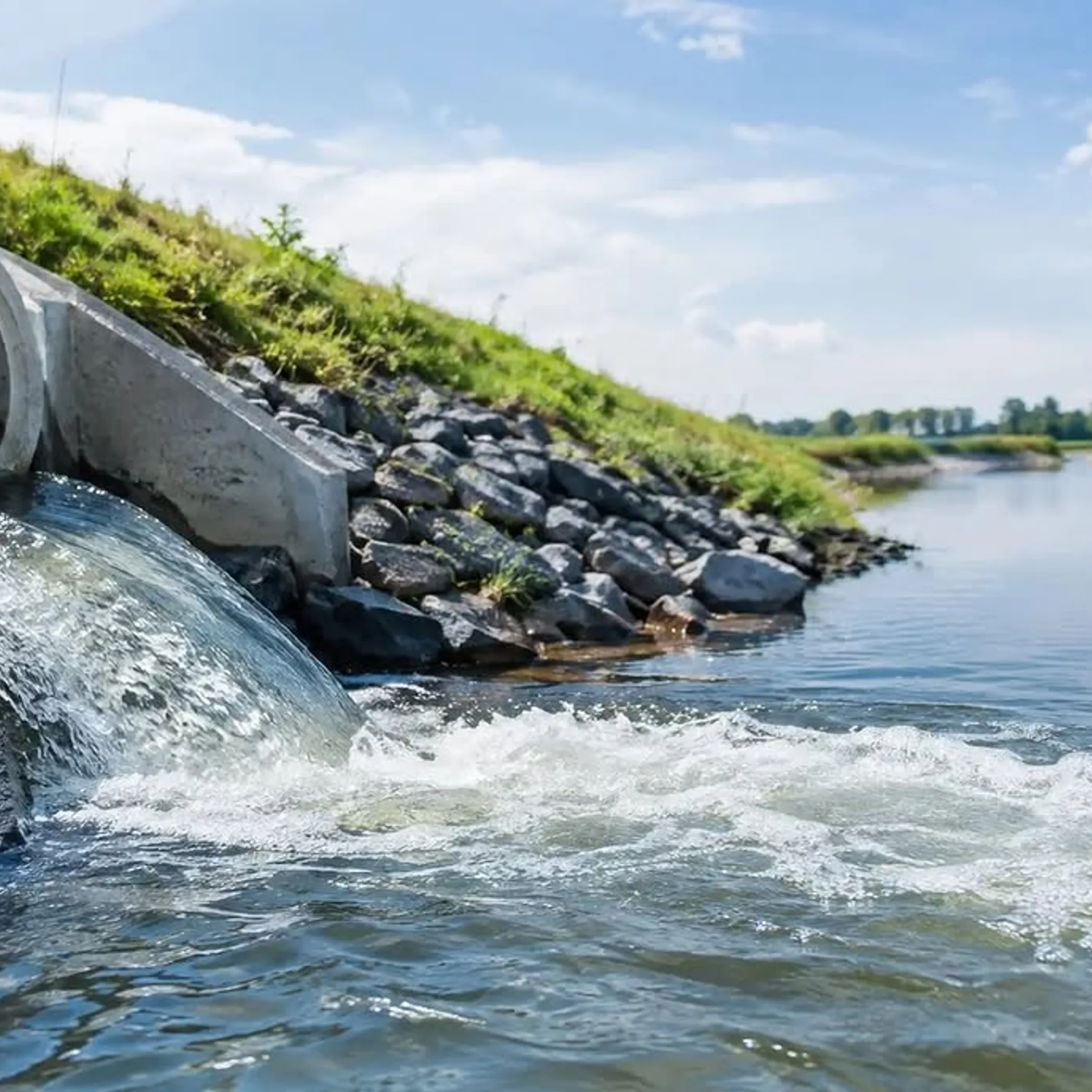
Even with the common framework of state planning provisions, local councils in Victoria have their own way of doing things. Melbourne Water could be involved if the project impinges on its catchments, drainage assets or waterways.
One might find the City of Melbourne, Port Phillip, Stonnington or Boroondara each putting forward different checklists, application forms or conditions for modelling and maintenance. A design that passes muster in one municipality may call for some reworking in the next, even if the sites are but a couple of suburbs from one another.
Practical Checks With The Council
Put in a word with the council or the authority before lodging to see if they want a pre-application meeting, a drainage referral, a certain stormwater report template or rainfall file, or perhaps a MUSIC/Blue Factor study. Get confirmation on the connection point and if a legal point of discharge is in order.
Find out too if a bond, covenant, asset handover document, inspection schedule or some form of maintenance agreement is expected. Such matters can have an impact on the title arrangements, site plan and the budget for construction, so it is better to put them to rest before the bulldozer does.
For an early project review in a day, concentrate on four things: the proposed maintenance, the checklist and clauses of the planning scheme and what the drainage authority wants. It is no substitute for technical design but a quick look will put any costly assumptions right while they are still in pencil.
Long-Term Ownership
Once built, WSUD assets require an owner. This could be a private landowner, a body corporate or owners corporation, a facility manager, the water authority or the council, depending on the site.
The maintenance agreement has to be clear on who inspects and pays for cleaning or replacement, the provision of access and record keeping. It ought to cover the eventuality of a system breaking down, a planting scheme failing or a new owner altering the surface areas.
Maintenance In Practice
Raingardens are in need of weed control and underdrain inspection as much as inlet and sediment cleaning. Vacuum sweeping is called for with permeable paving; pumps, screens, overflow and plumbing in the tanks have to be checked. And with swales one has to manage the vegetation without negating the reason for their being there.
A lightly used residential garden is not going to demand the same of a maintenance schedule as a car park subjected to traffic, litter and a lot of leaf fall. If the ordinary equipment cannot get to the asset in safety, the plan is likely over-optimistic.
Some Answers To Victoria WSUD Questions
Applicants are often caught by these issues. “It depends” is the short answer, though a more informative one will tell you what on.
Is it compulsory?
Only in so far as the planning scheme, permit, development standard or a condition of the council or drainage authority makes it so. The type, scale and location of the development and the controls in place will dictate the requirement.
Will a small development do without MUSIC?
Not in every case. Some will have you run a model for certain sizes of project or catchment, others are content with standard details and simpler math. Make sure of the method before the report is written up.
Are 53.18 and 56 one and the same?
They are not. The former’s stormwater standards and the latter’s integrated water management pertain to separate contexts. Clause 56 is of particular import for residential subdivision, whereas 53.18 may come into play with other proposals under the planning scheme.
Can you put in a rainwater tank and call it WSUD?
On its own, generally no. There is retention and reuse to be had, but it is unlikely to deal with total phosphorus or nitrogen, litter, sediment or the overflow from a big storm. Most councils would have a mix of measures.
And future repairs?
Obligation falls to the responsible owner as per the permit, title or handover documents. Do not leave this until after construction; responsibility goes with the land and not the person who made the application.
To Put The Application Together
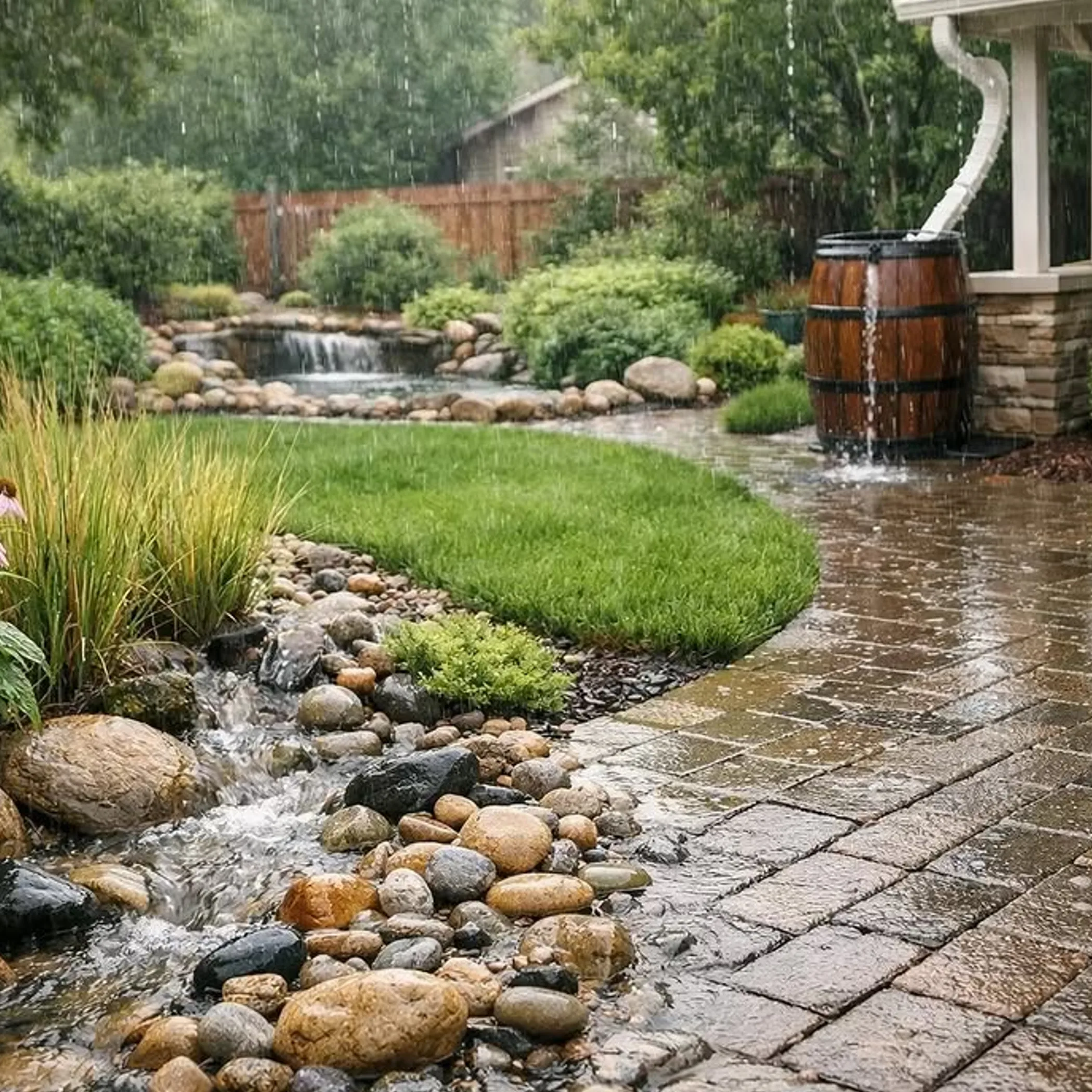
What makes for a good WSUD planning permit in Victoria is an application that is consistent in its approach from policy to maintenance. It will show the treatment train and the outcomes for pollutants and flows, have defensible assumptions and spell out who is left to tend the assets once the project team is gone.
Take the Victorian Planning Provisions and the council’s requirements as your starting point and have the technical targets and assessment tool put in writing. You will be better served by a practical design that can be maintained and put in the ground than by a clever model for a system one cannot get at.
The 2026 guidelines for WSUD in Victoria come down to this: check the local rules, put your reasoning on paper and make plans for the less glamorous years to come after you are done. The rain is not going to wait for the spreadsheet.